
My Mission
Tenacious and Compassionate Representation
Maurice King

On March 4, 2020, Maurice King, an intellectually disabled detainee at the Orange County Jail, was fatally assaulted in his jail cell by other detainees who took turns going into and out of Mr. King’s cell, holding the cell door closed and guarding the cell. Detention officers could see clear signs of the assault, both directly and on the security camera monitors in the control room. Not only did they decline to intervene in the assault, but they waited an hour and a half after the assault to check on Mr. King. Even after hearing moaning, groaning and labored breathing coming from Mr. King’s cell, the chose to wait another 25 minutes to check on him to avoid having to complete paperwork. When they finally did check on him, they found Mr. King severely injured and unable to walk. Another thirty-nine minutes after finding him, jail staff finally called 911. Mr. King died within minutes of arriving at Duke Emergency Department.
The North Carolina Department of Health and Human Services found the Orange County Jail violated state minimum standards law requiring detention officers to conduct regular rounds to check on prisoners. The detention officers, who made misrepresentations in their reports and interviews with investigators, were not disciplined. The Medical Examiner determined the cause of Mr. King’s death to be a heart attack resulting from the assault and the manner of death to be homicide. The District Attorney charged only a single prisoner with involuntary manslaughter.
Allyn Sharp represents Mr. King’s estate in a civil rights lawsuit against Orange County Sheriff Charles Blackwood and two of his detention officers. The case was originally scheduled to proceed to trial in March 2025. In February 2025, the District Court denied Defendants’ motions for summary judgment. Defendants appealed to the US Court of Appeals for the Fourth Circuit, which in July 2026 dismissed Sheriff Blackwood’s appeal and denied the detention officers’ appeal. The case has now again been scheduled for trial in January 2027.
Robert Frank Jackson, Sr.
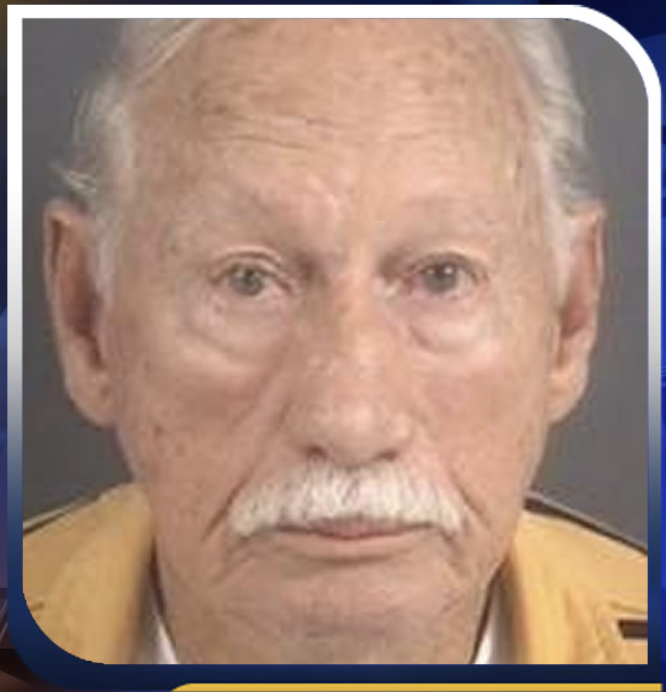
On November 22, 2017, Robert Jackson, an 81-year-old Air Force veteran, was found unconscious in his Cumberland County home, where his wife of sixteen years had been fatally shot. Mr. Jackson was taken by EMS to the hospital where he was diagnosed with “suspected unintentional overdose with oxycodone.” When he woke up in the hospital, he repeatedly asked where his wife was. Eventually, he learned that his wife was dead.
Mr. Jackson willingly went to the Cumberland County Sheriff’s Office, where he waived his right to an attorney and explained to an investigator that he had no recollection of the night in question after taking his prescribed medications and going to bed. He stated that Mrs. Jackson had been healthy, that she was a good person, that she had not been suicidal, that he loved her, and that she took care of him. When asked whether he had any idea what might have happened, Mr. Jackson replied, “I don’t have no idea. They just told me, they just told me she was dead and I have no idea why. I, I can’t imagine.” The investigator asked Mr. Jackson to sign releases for them to obtain his medical records, which he did.
Mr. Jackson, who had never before been charged with any crime, was arrested and charged with first degree murder. His family hired an attorney who agreed to represent him for only $5,000. Mr. Jackson’s medical records, which were produced by the State in discovery, listed twenty-seven medications that Mr. Jackson was prescribed as of November 22, 2022. Those medications included Oxycodone, Klonopin, and Ambien, a dangerous combination.
Despite knowing of Mr. Jackson’s medications and his lack of recollection of the events surrounding his wife’s death, instead of investigating a possible automatism defense, and without advising him of his right to a trial, Mr. Jackson’s attorney coerced Mr. Jackson to plead guilty to second degree murder by telling him, “You need to shut up and sign this paper ‘cause they could give you twenty years.” While sobbing and confined to a wheelchair, Mr. Jackson entered a guilty plea and was ordered to serve 12 to 15.4 years in prison.
Allyn Sharp hired a forensic psychiatrist who examined Mr. Jackson and found that as a result of the dangerous combination of medications he had taken as prescribed, he had in fact been unconscious at the time he likely shot his wife. Sharp filed an MAR on Mr. Jackson’s behalf alleging ineffective assistance of counsel, a violation of Mr. Jackson’s Sixth Amendment rights. After an evidentiary hearing in September 2025, a Cumberland County Superior Court Judge granted the MAR and convinced the District Attorney to offer Mr. Jackson a plea for time-served, which allowed Mr. Jackson to be released from prison.
John Otis Boyd

In 1998 and 1999, John Otis Boyd was wrongly convicted of multiple armed robberies that had been committed by a black man in and around Greensboro, most of them with the use of a crowbar. When shown a photo lineup in 1998, a witness of one of the robberies told Greensboro police investigator Jay Landers she knew Mr. Boyd from growing up in the same neighborhood and she was certain he was not the robber. Landers left this out of his report.
Then-prosecutor Gary Goodman tried Mr. Boyd three separate times to increase his felony sentencing points and ensure consecutive sentences. At the start of the first trial, the same witness came to court and told Mr. Goodman she knew Mr. Boyd and she was certain he was not the robber. Mr. Boyd’s trial attorney failed to interview her or call her as a witness. Mr. Goodman told her she could leave the courthouse. Mr. Boyd was convicted at all three trials and sentenced to up to 64 years in prison.
Shortly after Mr. Boyd’s convictions, Mr. Goodman was fired and disciplined by the North Carolina State Bar for withholding exculpatory evidence in several serious felony cases. His other cases — including that of Mr. Boyd — were never reviewed. Mr. Boyd, who is now 65 years old, has been in prison for 28 years.
Tragically, in 2022, Mr. Boyd’s motion for appropriate relief was denied by a Guilford County Superior Court Judge, even after a hearing at which victims testified they were certain Mr. Boyd was not the tire iron robber, including the witness who knew Mr. Boyd from growing up and who had told the investigator over 20 years before that she was certain Mr. Boyd was not the man who tried to rob her. The North Carolina Court of Appeals denied review of Mr. Boyd’s case. However, the North Carolina Innocence Inquiry Commission is currently investigating it. Allyn Sharp is not giving up on Mr. Boyd’s release from prison. Please contact her if you have information relevant to this case, including information about former GPD investigator Jay Landers or former ADA Gary Goodman.
Timothy Britt

In 2011, Timothy Britt was arrested on false sexual allegations made by a young girl with severe mental and behavioral issues who had made many previous allegations against others of sexual assault and abuse — all of which had been determined unfounded.
Robeson County Sheriff’s Office investigators Kevin Hickman and Butch Howell took Mr. Britt to the Sheriff’s Office, where they interrogated him. According to Mr. Britt’s MAR and civil complaint, Mr. Britt repeatedly denied the allegations, after which Hickman and Howell tricked Mr. Britt into signing a fabricated false confession without reading it by promising if he just signed something “saying we’ve talked” they would take him home and he’d probably never hear from them again. After getting Mr. Britt’s signature, the investigators obtained arrest warrants and took Mr. Britt to jail.
In 2013, as a result of the signed “confession,” Mr. Britt was convicted at trial of child sex offenses for which he received a 25-30 year prison sentence. In October 2017, Allyn Sharp filed Mr. Britt’s motion for appropriate relief. In November 2017, the Court granted Mr. Britt’s MAR, the State dismissed all charges, and Mr. Britt was released from prison. Allyn Sharp represented Mr. Britt in his civil rights lawsuit against the Robeson County Sheriff’s Office, which was resolved in 2022.